
The Reception’s Social Machinery
In Search of Lost TimeThe narrator’s movement through the Guermantes reception exposes how class, reputation, gendered performance, and selective hospitality determine who is seen and welcomed.
increasing Bearing strength in each event
 decreasing
Bearing strength in each eventdecreasingA Name at the Door

The Threshold
Ritualized entry
The usher asks for the narrator’s name and announces it at full volume. The formal act amplifies his fear of being unwanted.
A public test
Admission depends on names and recognition, not merely on a guest’s presence. The doorway makes social belonging visible and precarious.
The Prince’s Distance

Rank in Conversation
An introduction secured
M. de Bréauté introduces the narrator to the Prince. The exchange is courteous but reserved, sharply unlike the Duke’s familiar manner.
A revised judgment
The narrator discovers that apparent friendliness and genuine simplicity do not necessarily align. The reception turns social style into evidence to interpret.
The Swann Controversy

Friendship Versus Politics
A social verdict
The Duke and his companions condemn Swann’s Dreyfusism as ingratitude. Their language makes political dissent a breach of social obligation.
Private affection persists
The Duchess admits that she has loved Swann, even as she avoids meeting his family. Feeling and social convenience pull in opposite directions.
A Gesture Misread
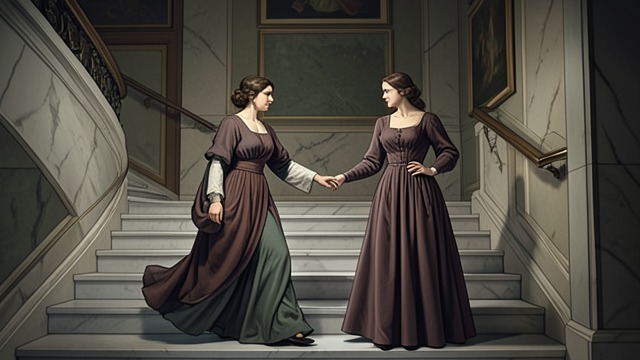
The Staircase Encounter
A public greeting
The Duchess crosses the staircase to greet Mme de Gallardon. The brief gesture allows her to appear magnanimous without repairing the underlying estrangement.
Social performance
Mme de Gallardon immediately converts the greeting into proof of intimacy. A single gesture becomes raw material for competing reputations.
The Rule of Distance

Learning the Code
Deliberate restraint
The narrator learns that an invitation or greeting does not erase hierarchy. A tactful refusal to approach may earn more respect than eager familiarity.
Social mastery
He becomes more fluent in the aristocracy’s coded affability. The lesson is not to believe every expression of equality.
At the beginning of the reception
During the first part of the reception
During the reception, after Swann leaves the garden
Later in the evening, as guests leave
After the reception, during later social encounters
